
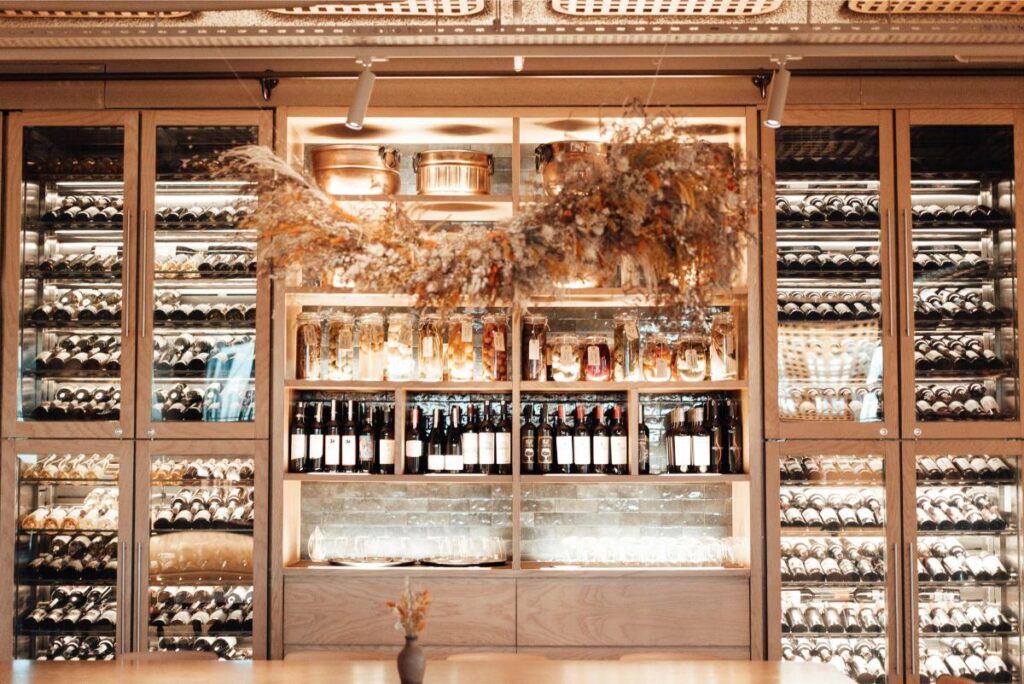
A wine fridge, also called a wine cooler, is a refrigerator built specifically for storing wine. It keeps bottles at a steady, cellar-like temperature that is warmer than a kitchen fridge, protects them from light, and holds them on their sides in racks designed for bottles.
This guide explains how a wine fridge works and how it differs from a regular refrigerator, the right temperatures for storing and serving wine, the main types, the features worth paying for, and, most importantly, whether you actually need one.
Wine Fridge vs. Regular Refrigerator
| Wine fridge | Kitchen refrigerator | |
|---|---|---|
| Typical temperature | Adjustable, roughly 40°F–65°F | About 37°F–40°F |
| Temperature stability | Designed to hold a steady temperature | Fluctuates with frequent door openings |
| Humidity | Generally less drying | Dry air can dry out corks over months |
| Light protection | Often tinted or UV-resistant glass | Interior light each time the door opens |
| Storage | Racks that hold bottles on their sides | Shelves designed for food |
| Vibration | Designed to run with low vibration | Not a design priority |
A kitchen fridge is fine for chilling a bottle you plan to open in the next few days or weeks. It isn’t a good home for wine you want to keep for months or years.
How Wine Fridges Cool: Compressor vs. Thermoelectric
| Compressor | Thermoelectric | |
|---|---|---|
| How it cools | Same principle as a kitchen fridge | Solid-state cooling module and fan |
| Cooling power | Strong; holds temperature in warm rooms | Limited; struggles in rooms warmer than about 75°F–80°F |
| Noise and vibration | Low hum when the compressor cycles | Very quiet, minimal vibration |
| Best for | Larger units, warm rooms, built-in installs | Small units in cool, stable rooms |
Storage vs. Serving Temperature
This is where many people get confused. For long-term storage, most experts recommend keeping all wines around 55°F (13°C), a classic cellar temperature, red or white. Stability matters more than the exact number. Serving temperatures vary by style:
| Wine style | Typical serving temperature |
|---|---|
| Sparkling wine and Champagne | 40°F–50°F |
| Light, crisp whites and rosé | 45°F–50°F |
| Full-bodied whites (such as oaked Chardonnay) | 50°F–55°F |
| Light reds (such as Pinot Noir) | 55°F–60°F |
| Full-bodied reds (such as Cabernet Sauvignon) | 60°F–65°F |
A dual-zone fridge lets you keep one zone at serving temperature for whites and sparkling wine and the other warmer for reds, or one zone for storage and one for serving. See our guide to serving temperatures for beer and wine for more.
Humidity, Light and Vibration
- Humidity: cork-sealed bottles are best stored around 50% to 70% humidity so corks don’t dry out. Most wine fridges are less drying than a kitchen fridge, but few actively control humidity. If you are aging wine for years, a small tray of water or a model with humidity features can help. Screw-cap bottles aren’t affected.
- Light: ultraviolet light can damage wine over time. Tinted or UV-resistant glass doors help, and so does keeping the fridge out of direct sunlight.
- Vibration: constant vibration may disturb sediment in wines aged for many years. It matters most for serious collectors, less for wine you will drink within a year or two.
- Bottle position: store cork-sealed bottles on their sides so the cork stays in contact with the wine.
Types of Wine Fridges
| Type | Best for | Keep in mind |
|---|---|---|
| Countertop | A handful of bottles in a small space | Small capacity; often thermoelectric |
| Freestanding | Most homes; flexible placement | Needs clearance around it for ventilation |
| Built-in / undercounter | Kitchens, islands and home bars | Must be front-venting to install in cabinetry |
| Single-zone | Collections of mostly one style, or storage only | One temperature throughout |
| Dual-zone | Mixed collections; storage plus serving | Usually costs more; each zone holds fewer bottles |
Ready to compare models? See our guides to dual-zone wine coolers, built-in wine fridges and wine fridges under $500.
Do You Need a Wine Fridge?
You probably do if…
- Your collection has grown beyond a few bottles, or you plan to keep wine for more than a few months.
- You buy wines meant to age, or bottles you’d be upset to see spoil.
- Your home has no naturally cool, dark, stable spot. A warm apartment or a climate with big temperature swings is hard on wine.
- You entertain often and want bottles ready at serving temperature.
- Wine bottles are crowding food out of your kitchen fridge.
You probably don’t if…
- You keep a few bottles and drink them within a few weeks. A cool, dark cupboard away from the oven is fine for that.
- You chill white or sparkling wine in the kitchen fridge for a few days before opening.
- You don’t have room for one with proper ventilation.
Features Worth Paying For
- Capacity: buy a little bigger than your current collection, and check that capacity is based on standard Bordeaux-style bottles. Wider bottles such as Champagne or Pinot Noir take more room.
- Temperature range and zones: make sure the range covers how you will use it.
- Cooling type: compressor for warm rooms or larger units; thermoelectric for small units in cool rooms.
- Shelving: sliding or removable shelves make it easier to reach bottles and fit odd shapes.
- Door: UV-resistant glass, a reversible hinge and a lock if needed.
- Noise: check the decibel rating if it will sit in a living area or bedroom.
- Venting: front-venting is essential for built-in or undercounter installation.
Where to Put It and How to Care for It
- Choose a stable spot away from direct sunlight, ovens, dishwashers and other heat sources.
- Leave the clearance the manual lists, unless it’s a front-venting model designed for built-in use.
- Avoid garages and other spaces with big seasonal temperature swings unless the unit is rated for them.
- Check the temperature with a thermometer occasionally and clean the interior every few months with mild soapy water.
- Organize by style or drinking window. Our guide on how to stock your wine fridge has a simple system.
Frequently Asked Questions (FAQs)
What temperature should a wine fridge be set to?
For long-term storage, around 55°F suits most wines. If you use it to keep wine ready to serve, set it cooler for whites and sparkling wine (about 45°F–50°F) and warmer for reds (about 55°F–65°F), or use a dual-zone model for both.
Can I store wine in a regular fridge?
For a few days or weeks before drinking, yes. For longer storage, a kitchen fridge is colder than ideal, its temperature fluctuates, and its dry air can dry out corks over time.
Is a wine fridge worth it?
It is worth it if you keep more than a few bottles, store wine for months or years, or lack a cool, dark place at home. If you drink wine soon after buying it, a cool cupboard and your kitchen fridge are usually enough.
What is the difference between a wine fridge and a beverage cooler?
Wine fridges run warmer and are designed for stable, low-vibration storage of bottles on their sides. Beverage coolers run colder, often down to the mid-30s °F, and are designed for cans and bottles you will drink soon.
Can I put food in a wine fridge?
It isn’t recommended. Most wine fridges run warmer than the 40°F needed to keep perishable food safe.
Conclusion
A wine fridge gives wine the steady temperature, darkness and calm it needs, things a kitchen fridge can’t offer for long-term storage. If you keep more than a few bottles or have nowhere cool and stable to store them, it’s a worthwhile upgrade. Browse all our options in the wine fridges hub, and learn how long sparkling wine keeps in our guide to how long Champagne lasts unopened.
One Comment
Comments are closed.